Your kid worked for four years (or more) for this. The graduation party should feel like a celebration you actually get to enjoy — not a second job that has you refilling the dessert table while you miss the cap toss. The secret isn't spending more; it's starting earlier and working from a checklist so the May crunch never happens.
This is the plan we wish every parent had in January. It covers the full timeline from three months out to day-of, a real budget, guest-list sizing, invitations, food quantities, and the one line item almost every checklist forgets: how you'll actually collect photos from eighty phones. Want it interactive? Build your dates in the free graduation party timeline planner.
First, three big decisions
Before any timeline, settle these — everything else depends on them.
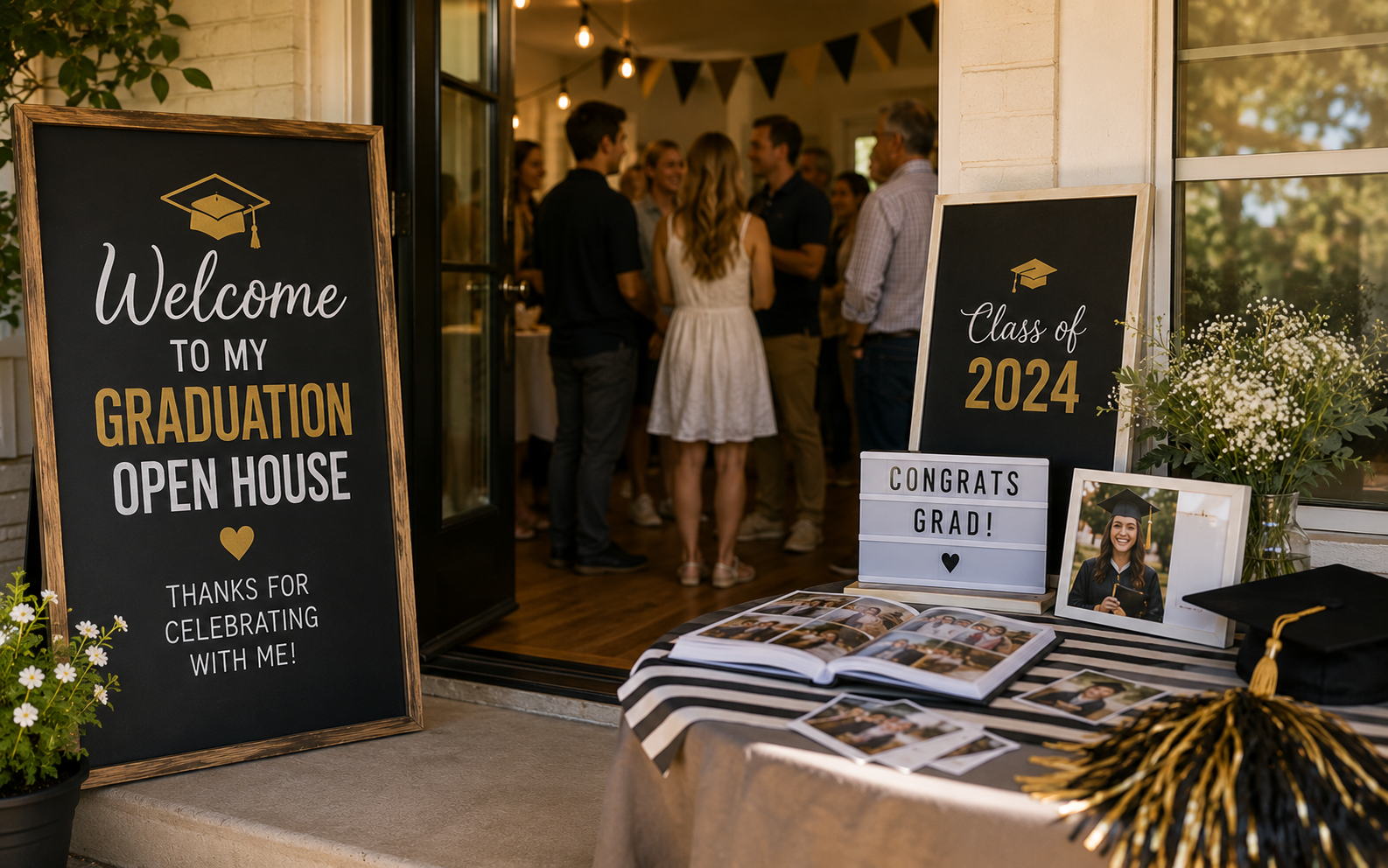
- Format. Backyard BBQ, come-and-go open house, rented hall, or restaurant dinner. This drives cost, guest count, and food. Not sure? Compare them in the graduation party ideas hub and the open house guide.
- Guest count. Draft the list now: the grad's friends, your friends, family, neighbors, and any out-of-town relatives. The number decides the format as much as the reverse — 120 people is an open house, 25 is a dinner.
- Budget. Pick a ceiling before you shop, or the little things (extra balloons, "just one more" platter) quietly double it.
3 months before
- Set the date. Check the school's ceremony schedule, family travel, and — crucially — other grads in the same friend group. Late-May and June weekends fill up; pick early so you're not one of four parties on the same Saturday.
- Lock the format based on your guest count.
- Book the venue if it's not your home. Popular halls and restaurant rooms go fast in spring.
- Send save-the-dates. Digital is perfectly fine. For an open house, include the come-and-go time window and the address.
6 weeks before
- Send invitations. Paper or digital, with a firm RSVP date about two weeks out. For wording, state the format clearly: "Open house — drop by anytime 1–5pm." Add the QR gallery link on the invite if you want early photo buy-in.
- Plan the food to match the format (see quantities below). Book a caterer now if you're using one.
- Build a decor plan. School colors, a name banner, a balloon garland, a memory table. Full guide: graduation party decorations.
- Decide your photo plan now. Rental booth, DIY corner, or QR guest gallery. A photo booth for graduation party alternative takes two minutes to set up; a rental needs booking at this stage.
- Pick a couple of games. Graduation party games for icebreakers, plus the free printable pack.
2 weeks before
- Confirm RSVPs. Chase the stragglers and adjust food quantities to the real number.
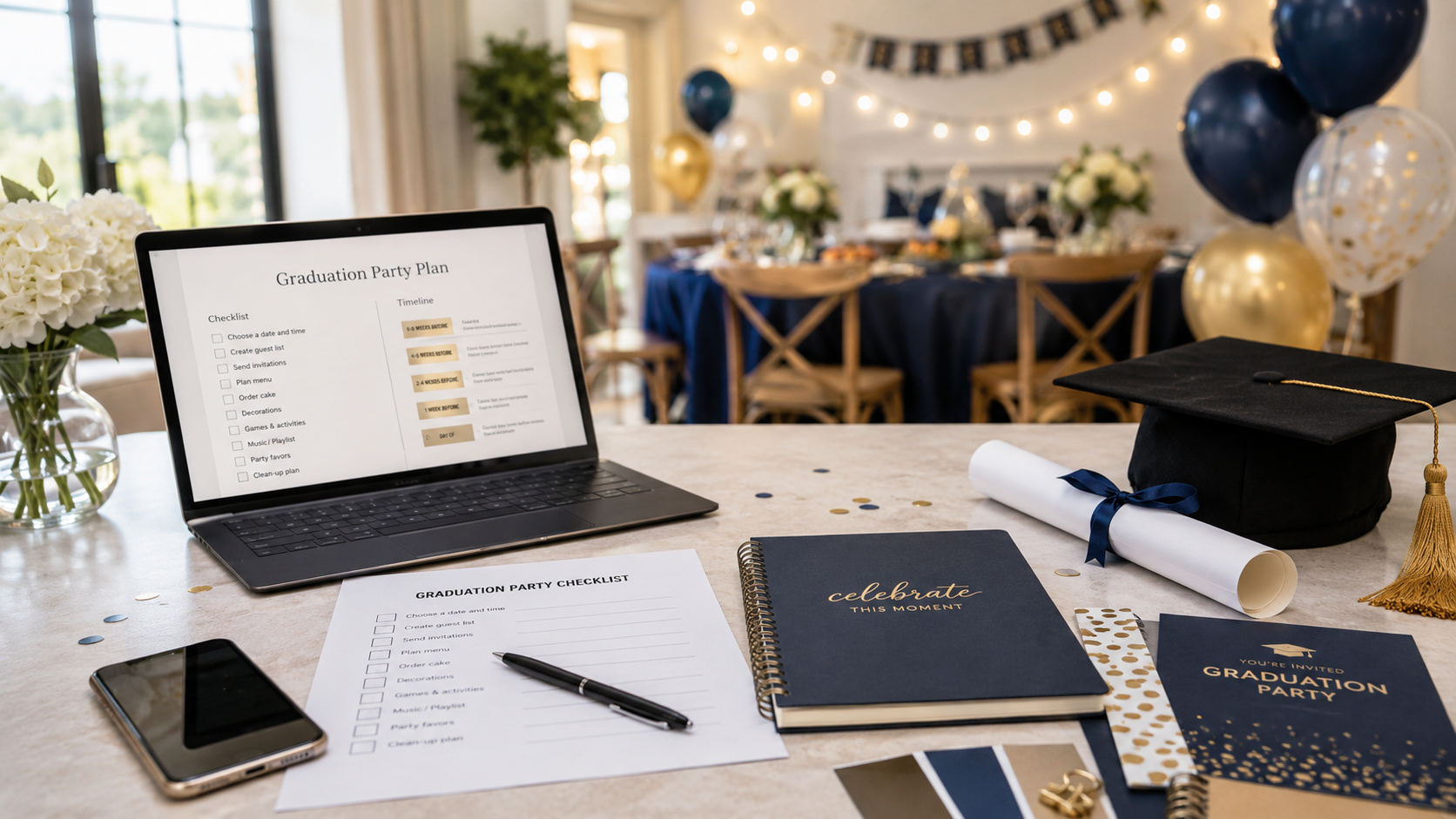
- Build the day-of timeline. Use the free graduation party planning checklist with backyard, venue, or open-house templates.
- Order the cake or dessert and confirm the pickup time.
- Print your QR codes if using a gallery — Grad Moments includes 18 templates (table tents, yard signs, invitation inserts).
- Decide the guest book. A sign-a-cap station, or a digital guest book where guests leave audio and video messages.
1 week before
- Confirm the grocery order or caterer.
- Borrow or rent tables, chairs, and a tent if needed.
- Charge the phones — yours and whoever you've drafted as the "photo aunt."
- Build the playlist — 80% the grad's picks, 20% background for the older crowd.
- Assign day-of jobs: who refills food, who watches the gift table, who nudges the first few guests to scan the QR code (after that it's self-serve).
Day of
- Set up 2–3 hours ahead (one hour for a simple open house).
- Place QR table tents where guests naturally look — the food table, the entrance, the bar.
- Set the memory table with childhood photos and a "scan to share today's photos" sign.
- Stop 30 minutes before guests arrive. Change, breathe, you earned it.
- During the party, don't play IT support. QR uploads are self-serve — enjoy your kid's day.
After the party
- Download the gallery ZIP within your hosting window.
- Order a print album from the gallery's PDF (Costco or Walgreens, usually under $15).
- Send thank-you notes with a link to the photo gallery as a digital favor.
How much food to buy
The most common planning stress is quantity. Rough guides for a 50-guest party:
- BBQ: ~1.5 proteins per adult (burgers/dogs), 2 sides, buns to match, plan for ~60 servings to be safe.
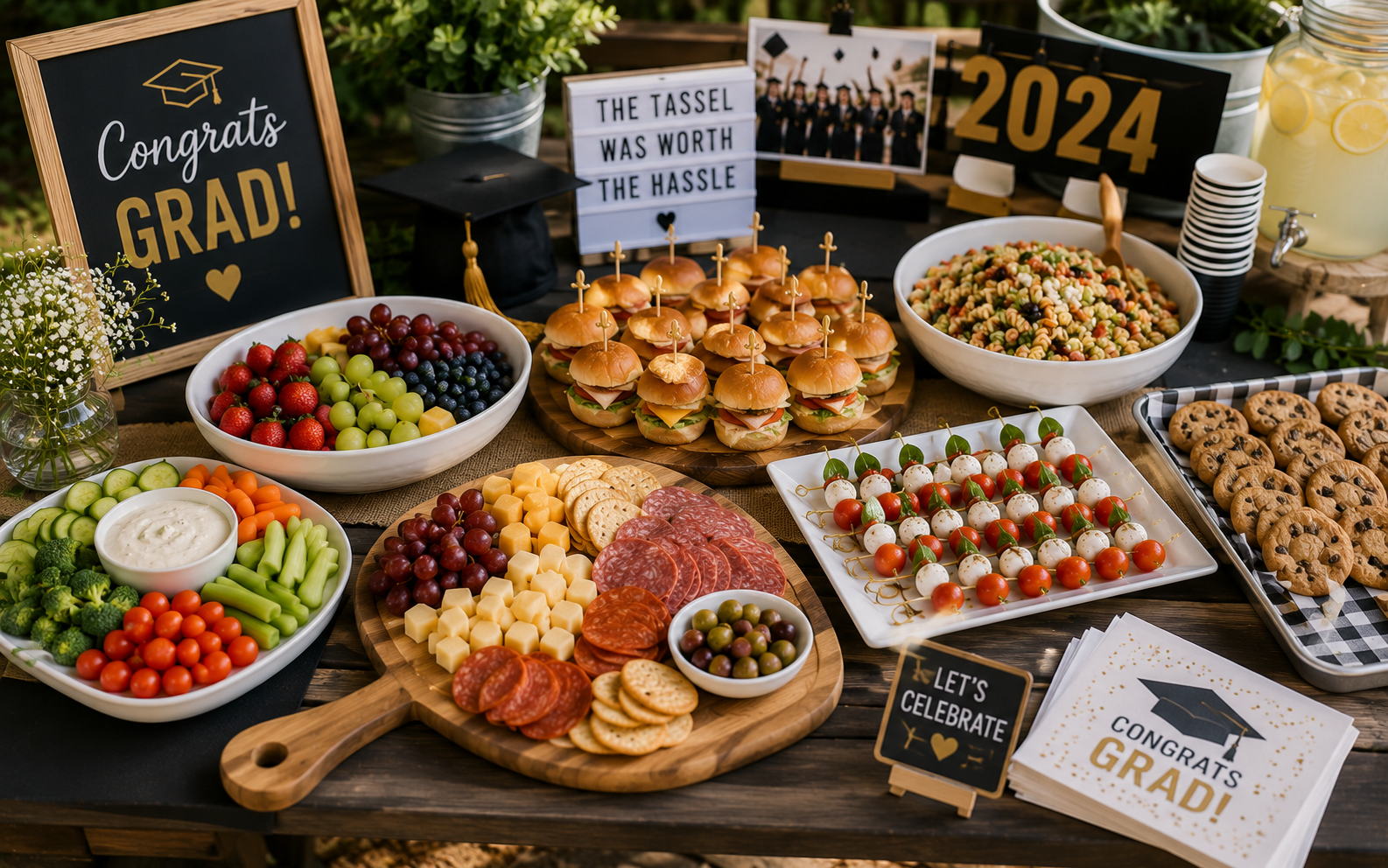
- Open house (come-and-go): cater for about 60% of the invite list at once, since they don't all eat simultaneously. Grazing food — sliders, trays, boards — beats plated.
- Drinks: ~2 per person for the first two hours, plus plenty of water and ice.
- Cake/cupcakes: one serving per guest plus 10% extra.
Budget snapshot
| Category | Typical range (50 guests) |
|---|---|
| Food (BBQ or grazing) | $200–$400 |
| Cake / dessert | $50–$150 |
| Decor | $50–$200 |
| Invitations | $0–$80 |
| Photo collection (QR gallery) | $49 once |
| Photo booth rental (optional) | $300–$600 |
| Total without a rental booth | $350–$880 |
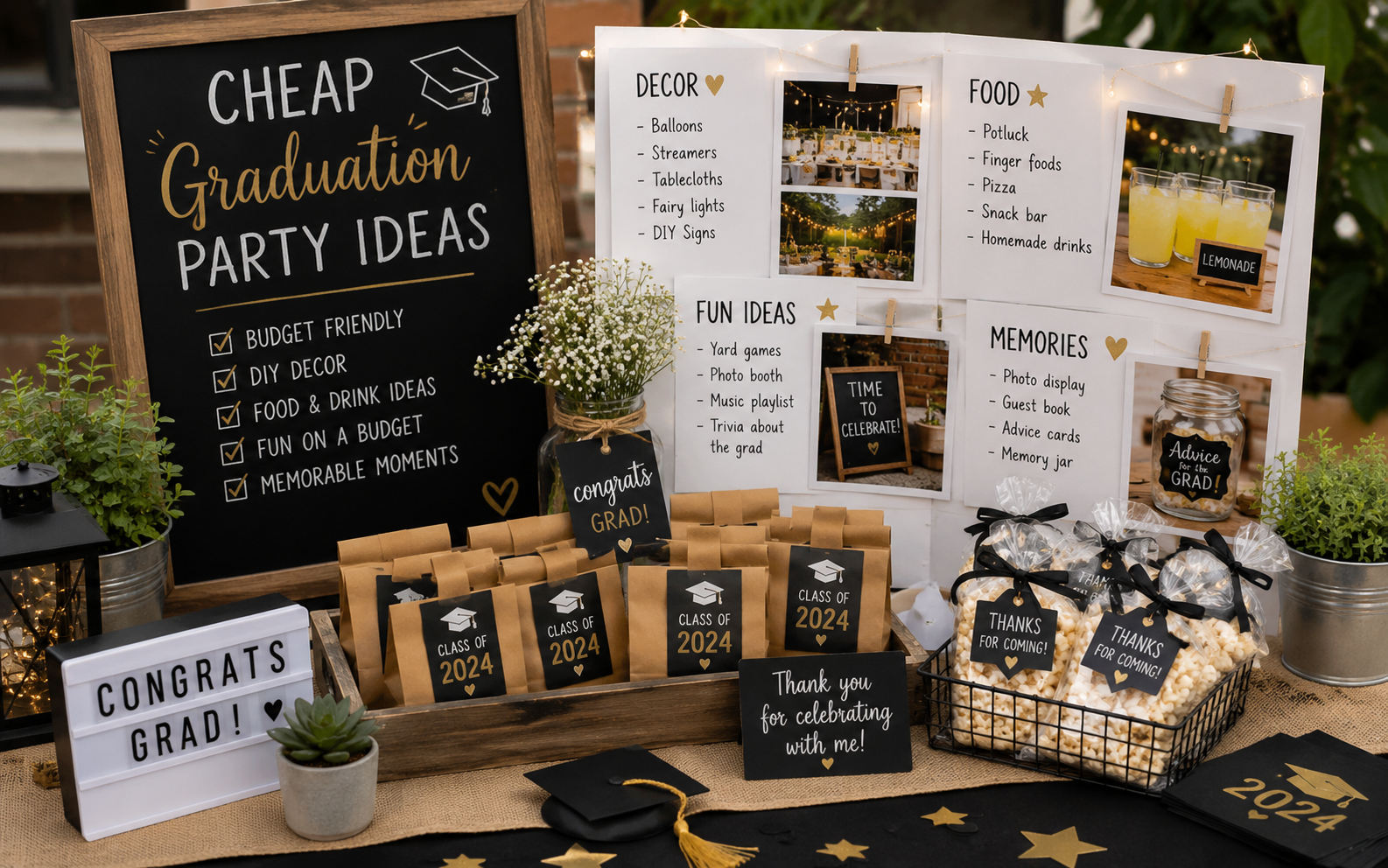
Need to stay under $500 total? See cheap graduation party ideas. Hosting at your house? The ideas hub has home-specific layout and parking tips.
The photo line item nobody plans for
Every planning guide reminds you to order cake. Almost none warn you about the real regret: you host 80 people, they take 300 photos, and a week later you have four — because "text me your pics" never works.
Fix it during planning, not at the party. Set up Grad Moments when you send the invitations, print the QR codes with your decor, and you're done. Guests scan and upload from any phone — no app, no login — and every candid lands in one gallery for $49 once. It's the cheapest, highest-return line item on the whole checklist.
Building the guest list
The guest list drives your budget, format, and food, so start it early. Work through these groups:
- The grad's people — close friends, teammates, their significant other.
- Immediate and extended family — grandparents, aunts, uncles, cousins.
- Your circle — the neighbors and friends who've watched this kid grow up.
- Mentors — a favorite teacher, coach, or youth leader, if they can come.
Once you have a number, match it to the format: 20–40 leans backyard BBQ or dinner; 60–150 means an open house. If two lists are fighting (the grad wants 40 friends, you want 40 relatives), an open house lets you host both without cramming everyone into one room at once.
Invitation wording that prevents confusion
Spell out the format so nobody's unsure how long to stay or whether there's a meal:
- Open house: "Please join us for [Name]'s graduation open house — drop by anytime between 1:00 and 5:00 pm, Saturday, June 14. Light bites and dessert served."
- Backyard party: "Celebrate [Name]'s graduation! Saturday, June 14 at 2:00 pm. Burgers, games, and cake in the backyard — casual dress."
- Dinner: "Join us for a graduation dinner honoring [Name], Saturday, June 14 at 6:00 pm at [venue]. Please RSVP by June 1."
Always include the date, time (or window), address, RSVP method and deadline, and whether it's a meal or grazing. Add the QR gallery link if you want early photo buy-in.
If you're not hosting at home
When the guest list outgrows your house, options in rough cost order:
- A friend or relative's bigger yard — free, familiar, needs a rain plan.
- A community hall, church hall, or clubhouse — affordable, book 2–3 months out.
- A park pavilion — cheap, but check permit rules and bring your own everything.
- A restaurant back room — no cooking or cleanup, best for smaller college/adult grads.
- A rented event space — most expensive; usually only worth it for large or formal parties.
Book early — spring weekends fill fast because every family is celebrating at once.
Rentals and equipment checklist
For a bigger party, you may need to borrow or rent:
- Folding tables and chairs
- A pop-up canopy or tent (and a weather backup either way)
- Coolers and drink dispensers
- Slow cookers or chafing dishes to keep food warm
- Serving platters and utensils
- Extra trash and recycling bins
- A speaker for the playlist
Borrow from neighbors first; a party-rental company covers the rest for a modest fee.
Draft a day-of crew
You should not be running the whole thing solo — you'll miss the party. Assign a few trusted jobs ahead of time:
- Food captain — refills platters, restarts slow cookers, manages the drink station.
- Gift and card wrangler — keeps cards safe and the gift table tidy.
- Photo nudger — points the first wave of guests to the QR sign (after that it's self-serve).
- Greeter — welcomes arrivals and directs them to food and the guest book.
Four people covering these means you actually get to enjoy your kid's day.
Weather and contingency planning
Outdoor parties live and die by the forecast. Decide your rain trigger the day before, not at noon during setup. Have a canopy up regardless, an indoor "move here" zone identified, and fans or shade ready for a heat wave. A five-minute contingency chat with your crew beats a soggy scramble.
Cleanup plan
The part everyone forgets until 6pm. Make it painless:
- Set out clearly labeled trash and recycling bins so guests self-sort.
- Keep a "leftovers to send home" stash of containers — guests love taking food, and it's less to store.
- Recruit two people to stay 30 minutes after for the big items.
- Break down the QR signs last; the gallery keeps collecting late uploads for hours.
Common planning mistakes to avoid
- Vague invitation timing — the #1 cause of awkward, empty stretches or everyone arriving at once.
- Under-buying drinks — people drink more water in summer heat than you expect.
- Leaving the group photo to the end — half the guests have left by then.
- No photo collection plan — the regret we see most: a beautiful party, four photos afterward.
- Doing it all yourself — delegate, or you'll spend the day in the kitchen.
Your planning checklist at a glance
Guest list · date and time · format · venue · invitations · food and quantities · drinks · cake/dessert · decorations · games · photo plan (QR gallery) · guest book · favors · rentals · day-of crew · weather backup · cleanup plan. Build it all interactively — with dates and reminders — in the free timeline planner.
Enjoying your own party
It sounds obvious, but the goal of all this planning is to be genuinely present at the celebration, and that only happens if you engineer it in advance. Every task you can delegate, automate, or eliminate before the party is a task you're not doing during it. Grazing food that sits out means you're not cooking to order. A self-serve drink station means you're not playing bartender. A day-of crew means you're not the only one refilling platters and directing guests. And a QR photo gallery means you're not chasing people to send you pictures or manning a booth — the guests capture everything themselves, and the memories assemble in the background while you're hugging relatives and watching your graduate beam. Plan the party so that once it starts, your only job is to enjoy it.
Choosing the right date and time
The date is the first real decision, and getting it right prevents a cascade of problems later. The biggest trap in graduation season is scheduling against the crowd: late May through June is a dense thicket of parties, and if your graduate shares a friend group, three other families may be eyeing the exact same Saturday. Reach out early and informally to the parents of your grad's closest friends to compare dates, because a little coordination means shared guests can actually attend everyone's party instead of being forced to pick. Beyond friend-group conflicts, check the school's official ceremony date, any family travel already on the calendar, and the realities of the season — a party the same weekend as a major holiday or a big local event will lose guests to competing plans.
Time of day matters as much as the date. Early-to-mid afternoon is the sweet spot for most formats, especially open houses, because it's convenient for all ages, avoids the awkwardness of a mealtime you're expected to fully cater, and leaves the evening open for guests with other commitments. A one-to-five or two-to-six window covers lunch-adjacent and afternoon guests without obligating you to serve a full dinner. If you're doing a sit-down dinner for a smaller college or adult crowd, an evening start makes sense. Whatever you choose, consider the weather and the light — a mid-afternoon-to-evening outdoor party lets you catch the beautiful golden-hour light for photos and the cap toss, while a midday party under harsh sun is less flattering and hotter for guests. Lock the date and time early enough to get it onto invitations six weeks out, because the sooner guests can commit, the higher your turnout.
Managing RSVPs and headcount
Nothing drives the rest of your plan like the headcount, and yet it's the number most hosts struggle to pin down. Set a firm RSVP deadline on the invitation — about two weeks before the party — and make responding as easy as possible with a phone number, a text line, or a simple online form. Even for a come-and-go open house where you might think RSVPs don't matter, a rough count is invaluable for sizing food and drinks, so ask for one anyway, framed as "let us know if you can stop by." Expect that a meaningful share of people won't respond by the deadline no matter how clearly you ask; that's normal, and the fix is a friendly round of direct follow-ups in the final week to the stragglers.
When you translate responses into quantities, build in realistic assumptions rather than treating every invitation as one guaranteed attendee. For an open house, not everyone invited will come, and those who do won't all be present at once, so you cater for peak-hour attendance rather than the full list. For a set-time party, plan closer to your confirmed count plus a small buffer for the inevitable last-minute additions and plus-ones. Keep a running list of who's coming and any dietary needs as responses trickle in, because a couple of vegetarian or allergy notes are far easier to accommodate when you know in advance than when someone mentions it at the food table. A clear headcount two weeks out is what lets you shop confidently, avoid both scarcity and mountains of waste, and stop second-guessing the numbers in the final stressful days.
Food and drink planning in depth
Food is the largest line item and the source of the most planning anxiety, so approach it methodically. Start by matching the food style to the format: grazing and finger food for an open house, grilled classics for a backyard BBQ, and a fuller spread or catered meal for a dinner. Then decide how much of it you're making versus buying, because that single choice drives both your budget and your stress level. Cooking everything yourself is cheapest but consumes the days before the party and can trap you in the kitchen during it; a hybrid approach — making a couple of signature dishes and buying trays, sides, and dessert — is what most hosts find sustainable. Full catering costs the most but frees you entirely, which can be worth it for a large party.
Quantities are where people go wrong in both directions. A reliable method is to plan a set number of servings per guest for each category — roughly a serving and a half of proteins, a couple of sides, and one dessert per person, plus a ten percent buffer — and to scale drinks generously, since people drink far more water and cold beverages at a summer afternoon party than you'd expect. Set up drinks as a self-serve station with large dispensers and coolers so you're never playing bartender, and keep water front and center in the heat. Think about the practical logistics too: slow cookers and chafing dishes keep hot food safe over a long window, grazing boards and trays hold up better than plated meals for come-and-go timing, and clearly labeled dishes save you from answering "what's in this?" a hundred times. Finally, plan for leftovers with send-home containers, because guests love taking food and it spares you a fridge full of it. Good food doesn't have to be elaborate — it has to be plentiful, easy to serve, and matched to how your guests will actually eat.
Related: Graduation party ideas · Graduation open house · Decorations · Free timeline planner
Frequently Asked Questions
Collecting guest photos?
Grad Moments gives your guests a QR code to upload photos and videos — no app, no login.
See How It Works