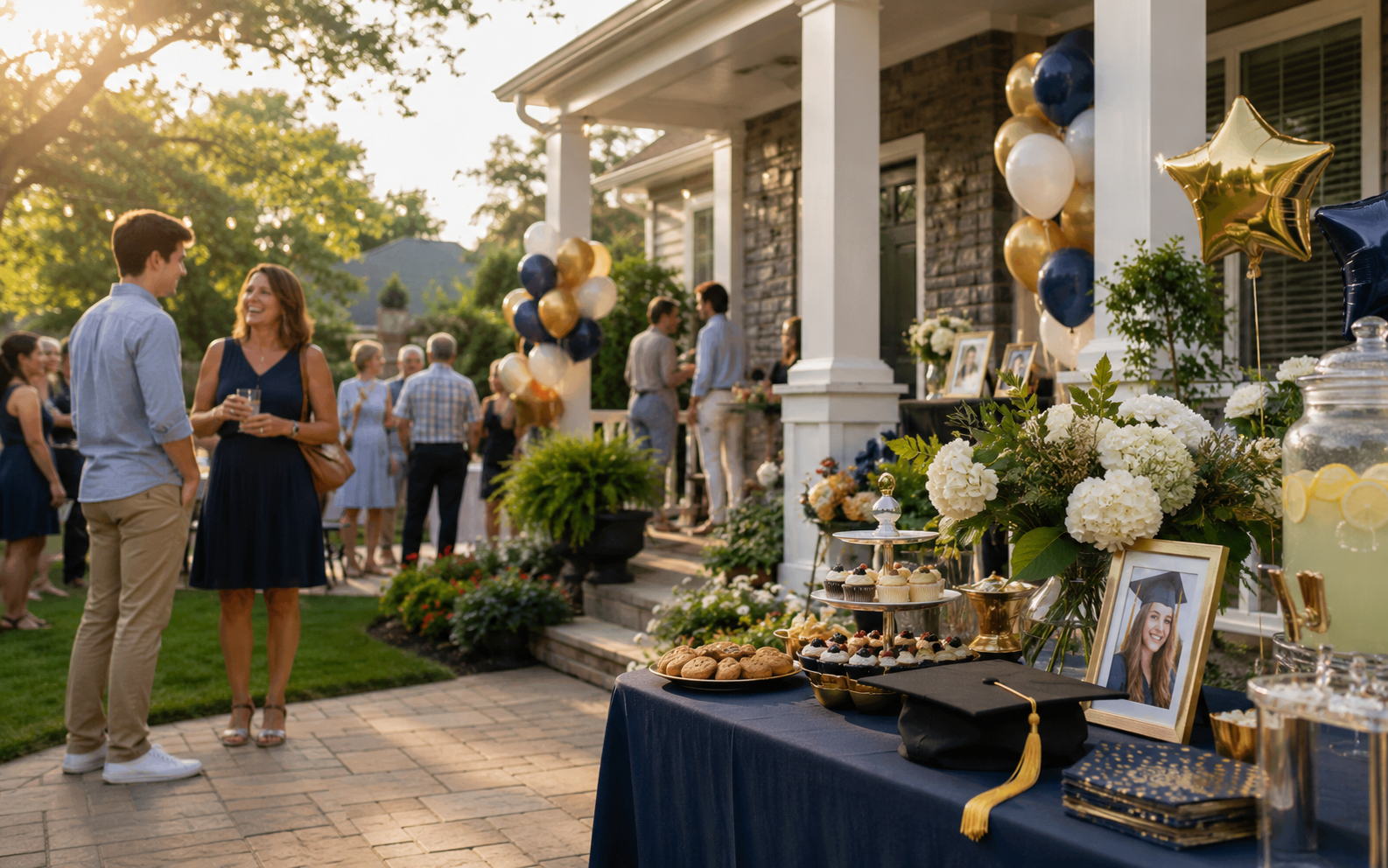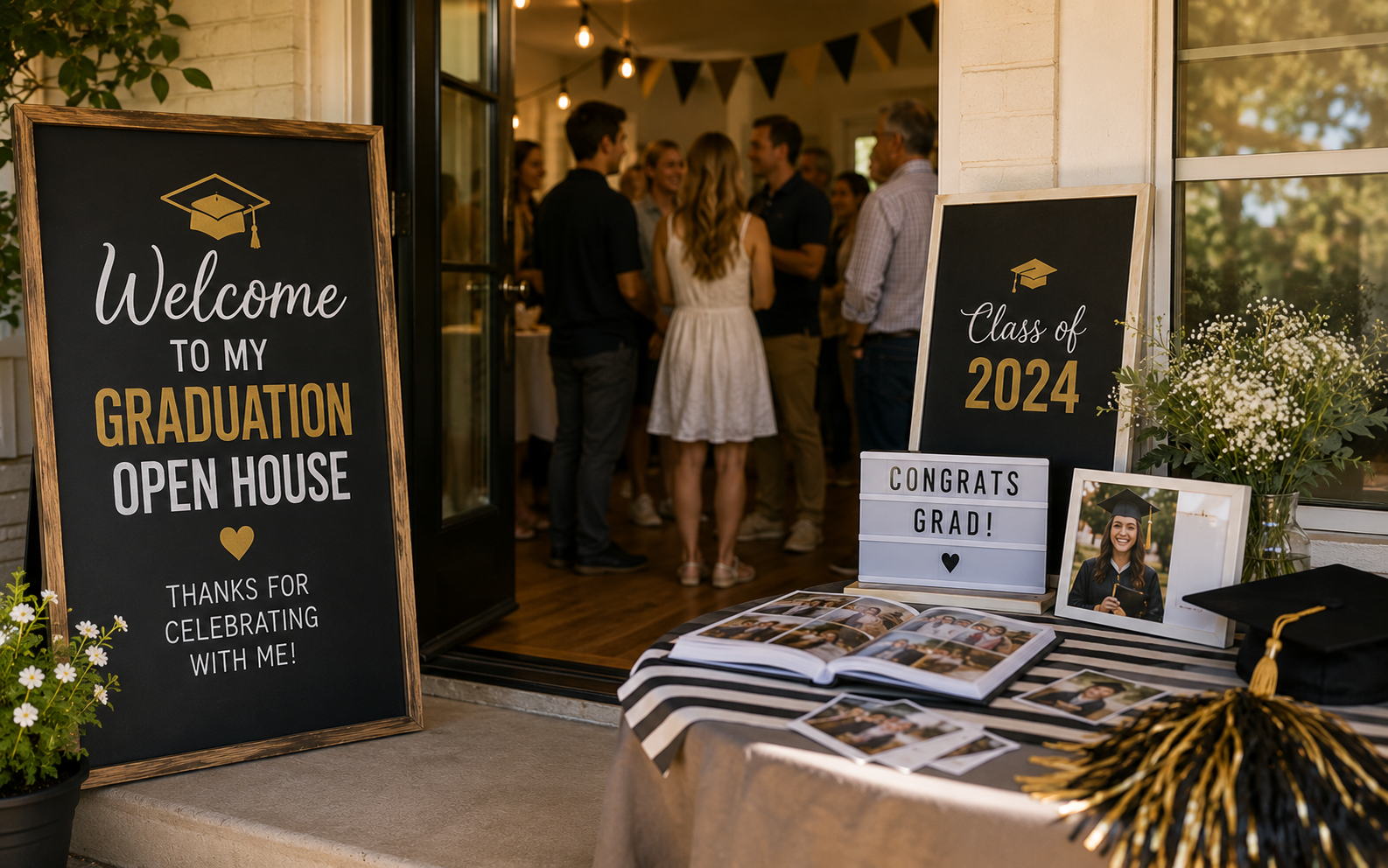
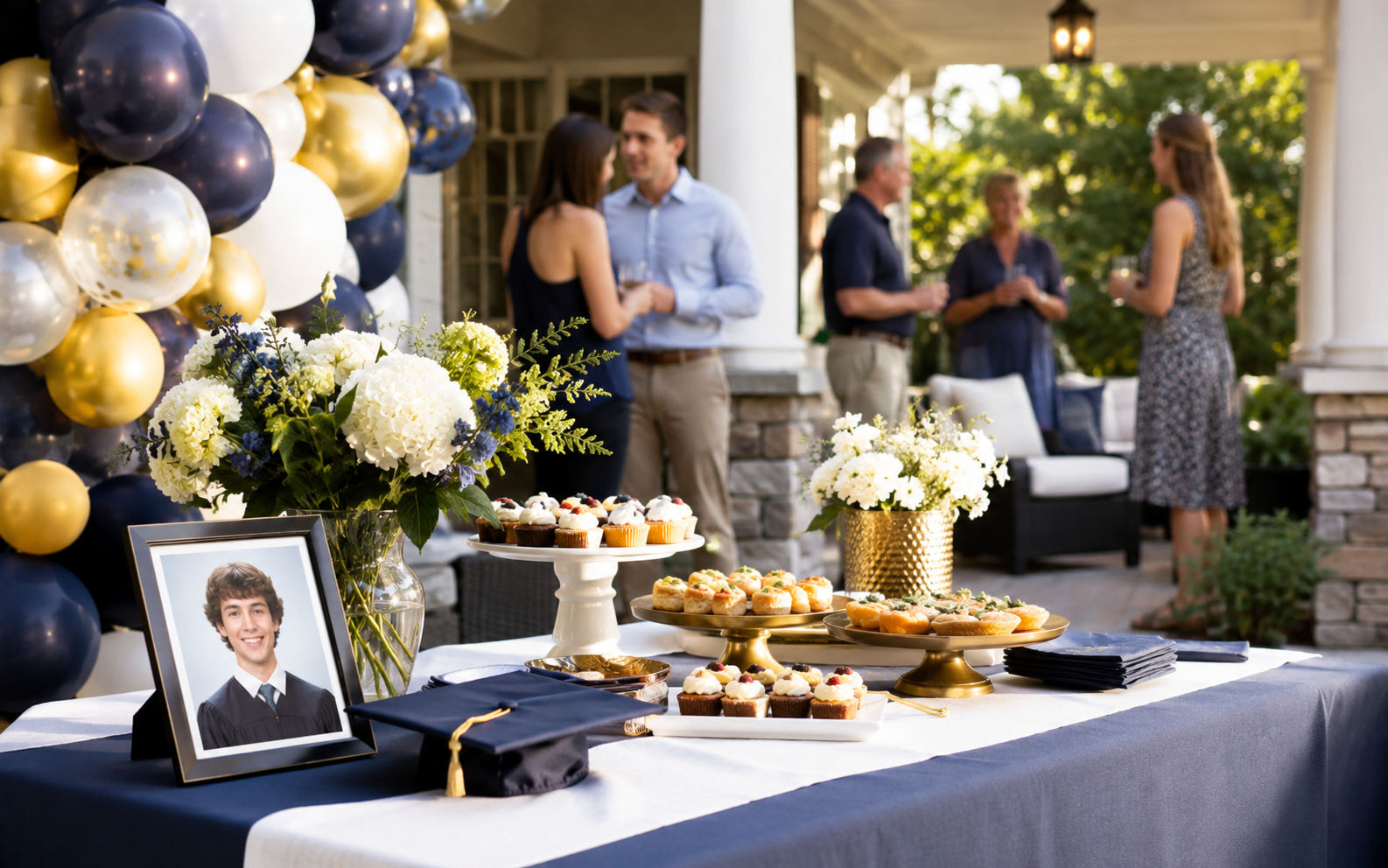
"Open house graduation party" is the phrase that goes on the Facebook invite, and it's the format most families are really searching for when they plan a come-and-go celebration. This is the same event covered in the full graduation open house guide — but where that guide explains what the format is and why it works, this one is about execution: exactly how to word the invitation, run the flow hour by hour, time the food, lay out the space, and end the day with photos when no two guests are on the same schedule. If you already know you're hosting an open house and just need to run it well, this is your playbook.
Invitation wording that sets expectations
The number-one open-house mistake is vague timing, so your invitation has to make the come-and-go nature unmistakable. Spell out the window and that guests don't need to stay for the whole thing:
- "Please join us for an open house graduation party honoring [Name]. Come and go as you please, 1–5pm, Saturday, June 14, at [address]."
- "Help us celebrate [Name]'s graduation! Open house, 2–6pm, June 15. Stop in anytime — light bites and dessert served."
- "Drop in anytime between 1 and 5pm — no need to stay long" (use this only if you truly mean it).
Always include the date, the time window, the address, and — even for a casual come-and-go — a soft RSVP line like "let us know if you can stop by," because a rough headcount is what lets you size the food. Add a parking note if street parking gets tight, and drop in the photo gallery link if you want guests uploading from the moment they arrive.
Hour-by-hour host flow
An open house runs itself if you plan the rhythm in advance. Here's a reliable shape for a 1–5pm window:
12:00–12:45 — Final setup: food stations out, decor placed, QR table tents on every table, memory display up. 1:00 — Doors open. The grad greets people near the food, not stuck in the foyer. 1:00–2:30 — First wave. Keep hot food refreshed and cold trays topped up; refill drinks. 2:30–4:00 — Peak crowd. Replenish platters, empty the trash, and run the one "everyone's here" moment — a quick group photo or a short toast. 4:00–5:00 — Stragglers and close family. Dessert and leftovers come out; the pace slows. 5:00 — Soft close. Don't rush grandma out at 5:01; let the last visit breathe. 5:00+ — Teardown in waves; late uploads keep filling your gallery for hours.
Food timing for a four-hour window
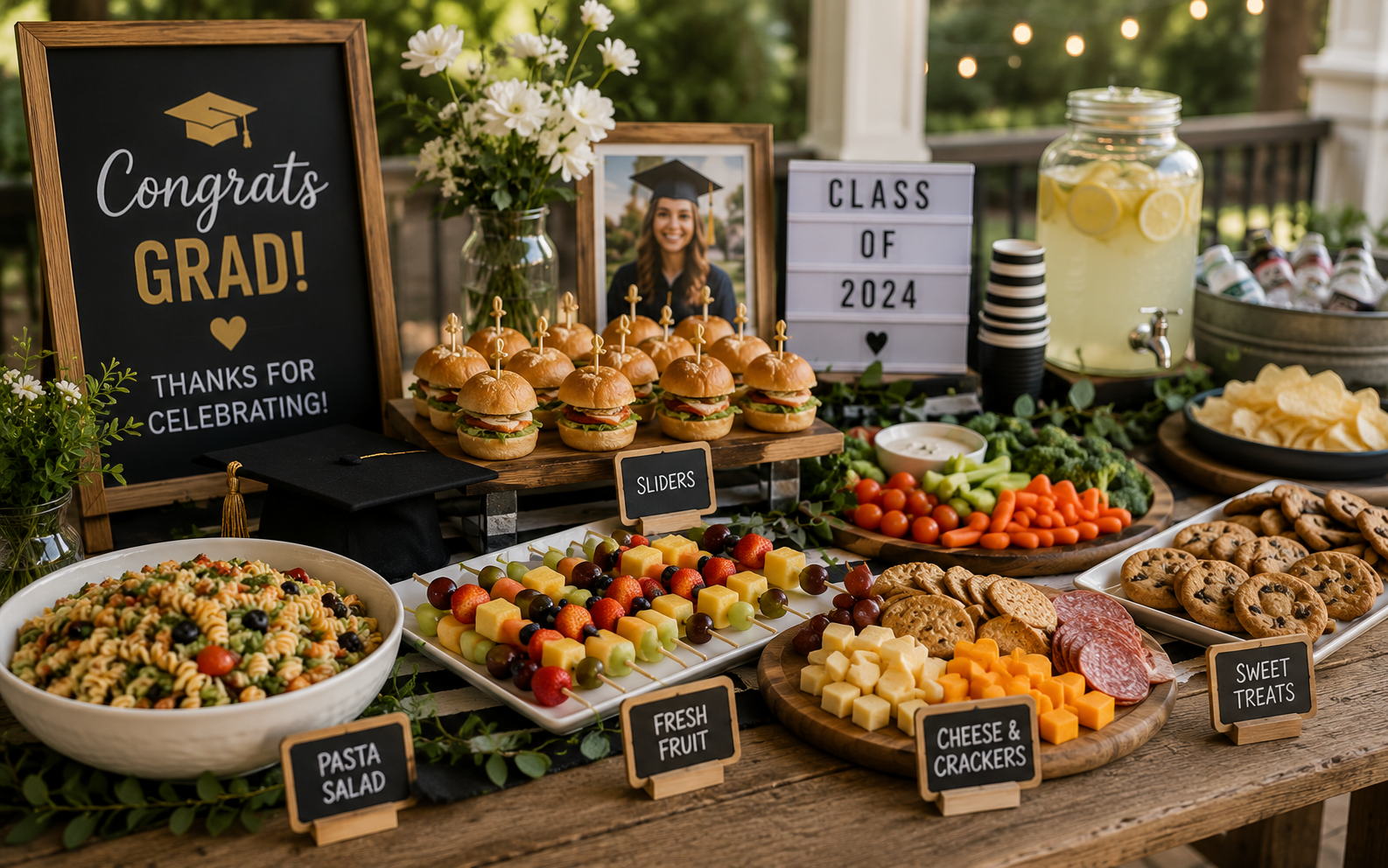
The execution challenge with open-house food isn't what to serve — sliders, wraps, pinwheels, fruit and veggie trays, a cheese board, and cupcakes all work — it's keeping it appealing from the first guest to the last. The trick is to serve in replenishable batches rather than dumping everything out at 1pm. Keep a reserve in the kitchen and refresh the trays every 30–45 minutes so a 4:30 guest sees a spread that still looks inviting, not a picked-over battlefield. For food safety across a long window, keep hot items genuinely hot in slow cookers or chafing dishes and cold items on ice, and don't let perishables sit in the summer-heat danger zone. Cater for roughly 60% of your invite list being present at once, since guests arrive across the whole window rather than all at the same time. Skip anything that wilts fast or needs you carving it to order — the goal is food that holds itself so you can enjoy the party instead of running a buffet line.
Lay out the space for traffic flow
A come-and-go crowd needs a path, not a pile-up. The layout that keeps guests moving looks like this:
[Entrance] → [Food table] → [Grad + memory photos] → [Dessert] → [Gifts / guest book] → [Yard / games]
Put the gift and card table near the door so it never clogs the entrance, and place the food deeper inside so arrivals flow past the grad and the memory display on their way to it. Keep the grad positioned near the food rather than trapped greeting people at the door for four hours — that way they mingle instead of gatekeeping. A QR table tent belongs on the food table and the gift table at minimum, and ideally on every surface guests pause at. If the party spans the front yard, the house, and the backyard, add small directional signs so nobody wanders in confused.
The photo problem — and how to actually solve it
The open-house format has one genuine weakness that catches families off guard every year: there is never a single moment when everyone is present. A rented photo booth fails here, because its two-hour block and its need for a line simply don't match a crowd that trickles in over four hours — the peak-time queue at 2pm misses the 1pm driveway hellos and the 4pm goodbye hugs entirely. The strategy that fits the format is continuous, passive collection: a QR guest gallery on every table from 1pm to 5pm, so the first guest and the last guest upload to the same album regardless of when they came. Guests scan and upload from their phones with no app and no login, and the gallery quietly assembles the full picture of the afternoon out of dozens of overlapping visits. Grad Moments is built for exactly this come-and-go pattern — $49 once, no rental, no attendant — and it pairs with a digital guest book so relatives who can only stay ten minutes can still leave an audio or video message before they go. Booth rentals cost $300–$800 and cover one corner for one block; a QR gallery covers the whole party all day for a fraction of the price.
Draft a small day-of crew
You can't greet guests, refill food, watch the gift table, and enjoy your kid's milestone all at once, so assign a few roles before the party. A food captain refills platters, restarts slow cookers, and keeps the drink station stocked through the peak. A gift and card wrangler keeps cards safe and the gift table tidy as they pile up across the afternoon. A greeter welcomes arrivals, points them toward the food, and nudges the first few guests to scan the QR code — after that it's self-serve. With three people covering those jobs, you're free to actually be present for the toast and the goodbyes instead of stuck in the kitchen.
Wind down and clean up in waves
Because there's no single end time, cleanup is gradual rather than a single scramble. Restock and tidy in waves as the crowd thins, keep labeled trash and recycling bins visible so guests self-sort, and have send-home containers ready — guests love taking leftovers, and it's less for you to store. Break down the QR signs last, since late uploads keep filling your gallery for hours after the final guest leaves. Then send a thank-you within a few weeks with the gallery link attached, which doubles as a keepsake and a digital favor.
Host checklist
- [ ] Clear time window on the invitation
- [ ] Soft RSVP line for a rough headcount
- [ ] Self-serve beverage station
- [ ] Food staged in refillable batches
- [ ] Grad positioned near the food, not the door
- [ ] QR codes printed and on every table
- [ ] Day-of crew briefed (food, gifts, greeter)
- [ ] Open house timeline PDF built
- [ ] Thank-you plan with the gallery link
Pillar: Graduation Open House · Ideas: Graduation party ideas
Frequently Asked Questions
Collecting guest photos?
Grad Moments gives your guests a QR code to upload photos and videos — no app, no login.
See How It Works